
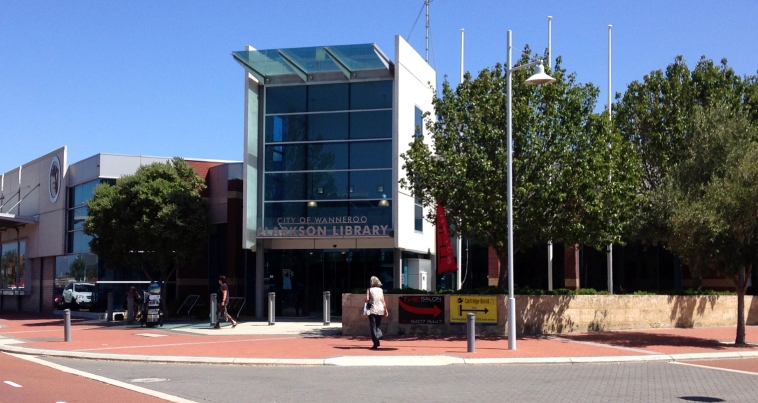
Clarkson Library Facility Management Plan

Client
City of Wanneroo

Project Overview
The objective of these works was to provide a 20-year Facility Management Plan (FMP) for the Clarkson Library. It provides an understanding of the current levels of service and condition of the library facility, and the needs/measures to be considered by the City to maximise the facility’s potential and functionality.
It involved an assessment of the building’s functionality to influence the long-term planning and the City’s future investment decisions related to the facility. Four technical reports were undertaken relating to:
- Essential safety measures report (fire and emergency compliance) completed by Australian Essential Services Compliance (AESC).
- Structural Maintenance Plan completed by Structerre Consulting (Structerre).
- Building disability access and compliance inspection undertaken by Taycon.
- Condition Assessment and Lifecycle Costing Analysis completed by HFM Asset Management (HFM).
These works also required a functionality assessment of the Clarkson Library to identify current operating constraints and limitations within the current design, with a view to improving the service levels and functional capabilities for the community. This involved consultation with internal stakeholders who have had a direct interest in the performance and/or functionality of Clarkson Library, to gain insight into building operations and perceptions of what does or does not work well.

Project Outcomes
The outputs from the technical review identified a series of recommendations relating to the buildings’ compliance with Australian Standards, statutory obligations and best practice in relation to the ongoing management of the Clarkson Library.
In total, 168 assets were viewed and, in general, it was found that the building is in good condition, being maintained to a good level with minor maintenance and aesthetic renewals required and a need for several non-conformances to current standards, particularly around accessibility, e.g., door handles, door widths, etc.
This culminated in the development of a Life Cycle Cost Management spreadsheet, which outlines the Renewals Plan (asset renewals) and recommended Planned Preventative Maintenance (PPM) tasks. It identified that the most significant investment years are 2029, 2032, and 2039, with a major investment required in 2040.
The functionality audit found:
- The current design of the facility is its biggest limiting factor, which is likely to have an adverse impact on its current and future performance. While being located in a reasonable location, it will be difficult to expand the library due to adjacent buildings, limited car parking, and its ‘built as’ design.
- There are some design issues (separation of the staff areas, transition space through the library and changes to the reception) that will need to be addressed in the coming years.